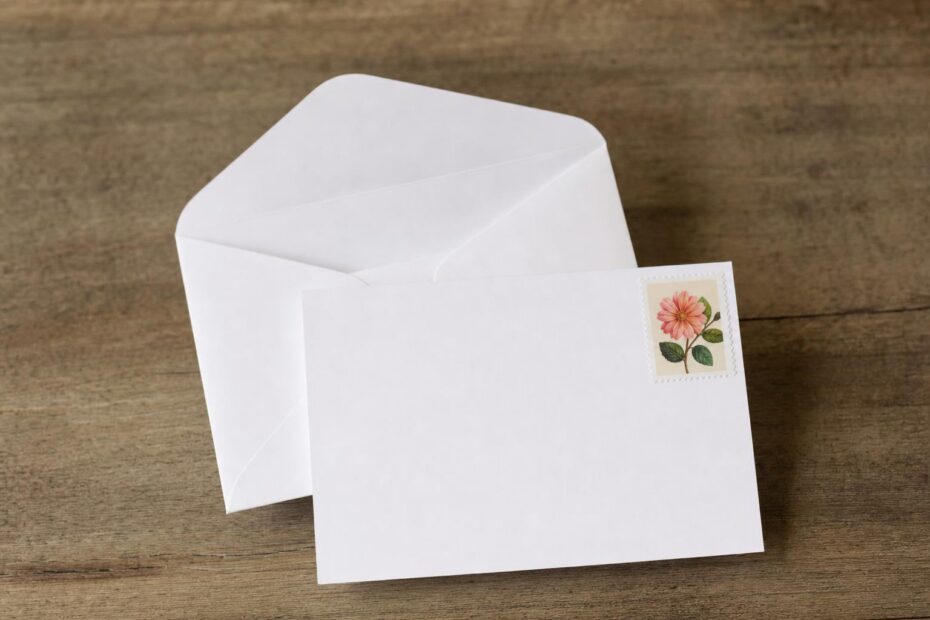
## Rsvp Envelopes Using A Forever-Stamp For Postcards
You can send reply cards that people just drop in the mail if you sort the details up front. Using rsvp envelopes using a forever-stamp on postcards is a small productivity trick: it reduces folding, eliminates glue, and gets replies in faster because guests treat postcards like a one-step action. But you have to be precise about layout, postage, and expectations.
### When To Choose Postcards Over RSVP Envelopes
Postcards work best when privacy isn’t needed. If you’re asking a simple yes/no or meal choice, a postcard invites a quicker response than an enclosed rsvp envelope. For a wedding with 200 guests, stuffing envelopes doubles the time and cost. A postcard lets you print the return address and reply line on the same card.
Keep in mind some people consider postcards less formal. If ceremony details, song requests, or personal messages are expected, stick with rsvp envelopes. If speed and simplicity matter, postcards are a solid option.
#### Addressing And Postage Details
Postcards are subject to postal rules that differ slightly from letters. A Forever stamp equals the current one-ounce First-Class letter price, so a lot of people put a Forever stamp on a reply postcard and the post office accepts it. Still, double-check current rates before you print thousands — policies can change. When you design the reply side, leave a clear block for the guest’s address and the stamp in the upper right. That reduces misprints and returned items.
Use clear, sans-serif type for the mailing area and keep it free of graphics. Guests should be able to adress the card in one go. If you include a pre-printed return block, make sure the lines line up with typical handwriting: two short lines for name and one longer for street tends to work best. Expect a few to tear or bend; plan for a small overrun in printing.
### Sizing, Paper, And Stamp Placement
Postcard dimensions matter. Standard postcard sizes are cheaper to mail and less likely to be classified as a non-machinable item. If your card is square or thick, it can trigger extra postage. Most designs land safely within the regular postcard category if they’re under the max thickness and have smooth edges.
Place the stamp in the top right. Place the return address on the left above the reply lines if you want to include it. Many hosts put a small reminder near the stamp: “Please place stamp here” or “RSVP enclosed” to prevent guests from putting the wrong postage. If you plan to use rsvp envelopes using a forever-stamp as your strategy, consider printing a tiny note that says “Forever stamp OK” — that reduces confusion for older guests who keep a stash of postcard-rate stamps.
#### Design Tricks For Quick Responses
Think about visual cues. A bold line that separates the guest’s response from the mailing side clarifies where to write. Use checkboxes for options: “Accepts / Regrets,” “Chicken / Beef / Vegetarian.” Small icons for meals speed up decisions; nobody wants to write long sentences under time pressure.
Include an easy-to-find deadline. If the RSVP date is two months before the event, put it in a different color or a small box that draws the eye. For wording, be direct: “Please Reply By June 1” beats polite paragraphs that bury the date. If you’re worried about guests forgetting, include an email or phone number on the host side so they can confirm electronically.
### Practical Steps To Prepare Postcard RSVPs
1. Mock up one printed sample and take it to the post office counter. Ask if the card qualifies as standard postcard size and whether a Forever stamp covers it. This one small errand can save you from having hundreds of underpaid cards come back.
2. Print a run with a small overage — 5-10% more than your guest list. People lose invites, write wrong addresses, or misplace the card before mailing.
3. If you plan to reuse design elements, save templates for the adress block and stamp placement so your printer keeps them consistent between batches.
### Putting It Together At Scale
When you’re mailing hundreds of invites, efficiency matters. Pre-printed rsvp envelopes using a forever-stamp on postcards removes one assembly step. Have your mail house or printer add a faint guide for where to fold or where to write the name so volunteers can check for completeness quickly. Track responses in a simple spreadsheet and mark who sent a postcard back. Expect that about 10% will call or email instead of mailing the card; that’s normal.
If you’re offering both postcard RSVPs and rsvp envelopes, label them clearly. An obvious “Reply Card” on the outside and a pre-addressed area on the inside reduces mistakes. Adding a small, printed rsvp stamp or sticker near the postage area also nudges guests: it signals exactly what to use and keeps things consistent.
A few tiny missteps will occur. Some guests will put the stamp in the wrong corner, some will use old postcard stamps they have saved, and a couple will recieves the invite late. That’s life. Plan for it by ordering a handful of spare invites and setting aside time the week after the RSVP deadline to follow up with anyone who hasn’t replied.