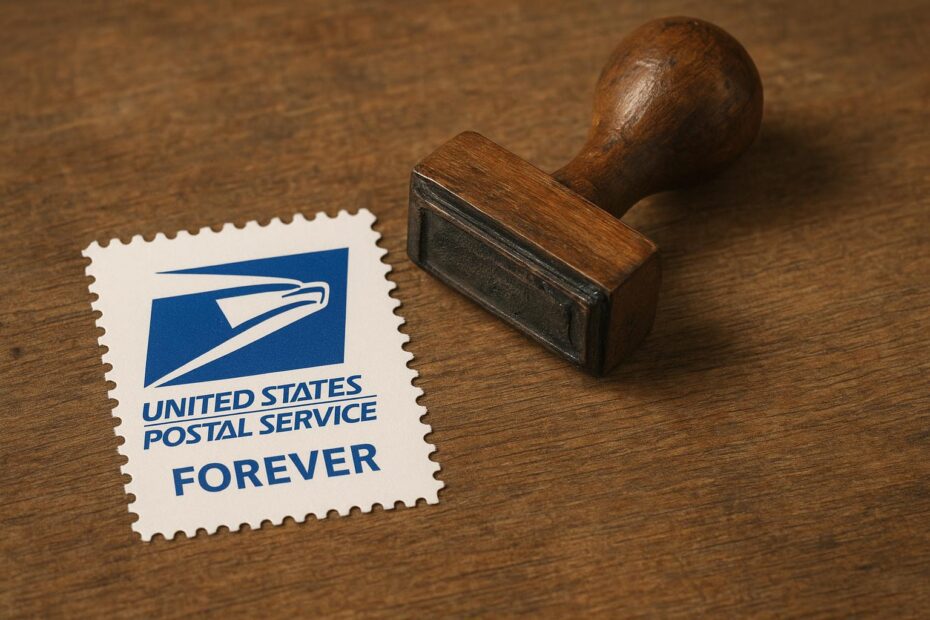
## Origins Of Forever Stamps: Why The Change Happened
The origins of forever stamps are surprisingly practical. In 2007 the U.S. Postal Service started issuing a stamp that would always pay first-class postage, no matter how rates climbed. It sounds simple, but the move emerged from real headaches: consumers stuck with old stamps after rate hikes, retailers dealing with inventory worth less after a price change, and the Postal Service wanting to cut the friction and cost of handling lots of small-value transactions.
### What Problem Were They Solving
Before forever stamps, every rate increase meant people needed new stamps or to add extra cents to make up the difference. That led to confusion at post offices and long lines. The forever stamps idea removed that recurring problem. Buyers could purchase a supply and know they wouldn’t need to top up. That clarity mattered to everyday people and businesses alike.
## A Short Walk Through USPS Stamp History
The usps stamp history is long and full of gradual innovations, not single dramatic leaps. Stamps first reflected a fixed service price, then slowly became collectibles, political statements, and branding tools. The operational side—how mail is paid for and handled—kept evolving. The forever stamp sits at the intersection of commerce and convenience in that timeline.
### Early Experiments And The Run-Up
The usps stamp history includes earlier attempts to deal with changing rates. Postal cards, meter stamps, and bulk mailing options all tried to give stable pricing for segments of users. Yet none addressed the simple act of mailing a single letter reliably across rate changes. The forever stamps origins are rooted in those small but persistent gaps in service.
#### The Pilot And Public Response
A pilot program tested the idea. The initial public reaction was pragmatic. Collectors were skeptical at first; they had long treated stamps as dated artifacts tied to a moment. Regular customers were more straightforward: they liked not having to buy 2-cent add-ons when rates rose. That public preference pushed the program into full adoption.
### How Forever Stamps Work In Practice
The concept is not magical. A forever stamp equals the current price of a 1-ounce first-class letter at the time of use, not at the time of purchase. That legal and accounting nuance is important inside postal operations. For the average sender, though, it just means you can keep unused stamps in a drawer without worrying.
## Behind The Scenes: Policy, Money, And Logistics
The origins of forever stamps trace back to policy needs as much as convenience. The Postal Service wanted a way to smooth revenue swings caused by rate changes and reduce transactional burden at retail counters. Forever stamps simplify inventory management for sellers and cut customer service issues for post offices.
### Accounting And Legal Framing
From an accounting perspective, a forever stamp sold today is a liability until it is used. The USPS records that liability and recognizes revenue when the stamp is cancelled. That bookkeeping decision made the stamps workable. Lawmakers also had to accept the idea that a payment instrument sold at one rate could be redeemed at a future, higher service value.
#### Marketing And Public Adoption
Marketing matters. The stamp’s branding emphasized stability and ease. Over time, the forever stamps origins story became part of postal culture. People started buying them for emergencies, travel, and bulk household use. The day-to-day value became its strongest selling point.
## Design, Collecting, And Cultural Impact
Collectors adapted. The forever stamps origins didn’t erase philately; it shifted it. Collectors began focusing on design variations, printing errors, and commemorative issues rather than face value. The usps stamp history shows that form often outlasts function when the function becomes standard.
### Examples That Show The Shift
Look at commemorative series after 2007. Designs stayed bold and topical: civil rights figures, pop culture nods, national parks. The stamp’s functional role shrank in collectors’ interest, while its symbolic role expanded. People still trade and hoard certain issues, but now it’s about rarity and art, not future postage value.
## Why The Origins Of Forever Stamps Matter Today
Understanding the origins of forever stamps clarifies why the program persists. It reduced friction, cut costs, and matched customer behavior. For small businesses that mail invoices and for families who send holiday cards, that predictability is real. The policy lessons also echo in other areas: making services simpler often trumps complicated, theoretically perfect systems.
### The Ripple Effects On Postal Planning
The usps stamp history shows repeated cycles of simplification followed by specialization. Forever stamps nudged the USPS toward fewer, more flexible retail products. That reduces training time for clerks and simplifies pricing communication to the public. It also changes revenue forecasting—cash flows from advance stamp sales have to be modeled against uncertain redemption timing.
#### Ongoing Debates And Critiques
Not everyone loves the change. Some argue that perpetual instruments complicate rate-setting incentives or obscure costs. Others point to collector dissatisfaction. These critiques are part of the record now, but they didn’t derail the main idea because the practical benefits were immediate and visible.
### How To Spot A Forever Stamp
They usually carry the word “Forever” and a design, but the simplest test is how they’re used: any current first-class letter can be mailed with one. Retailers often sell them in sheets and booklets. If you see a pile of older forever stamps in a drawer, they still cover postage. That reality made the change stick.
Here’s one last concrete image: a grandmother buying a book of forever stamps at Thanksgiving so she never has to worry about prices again. Simple, a touch sentimental, and totally practical. That everyday choice captures the appeal and the practical roots of the origins of forever stamps and why they felt necessary in the broader usps stamp history. Somewhere in a kitchen drawer, those stamps wait for the next card to be sent, and their promise is still solid, no matter what budget committees do. Teh small stuff matters.