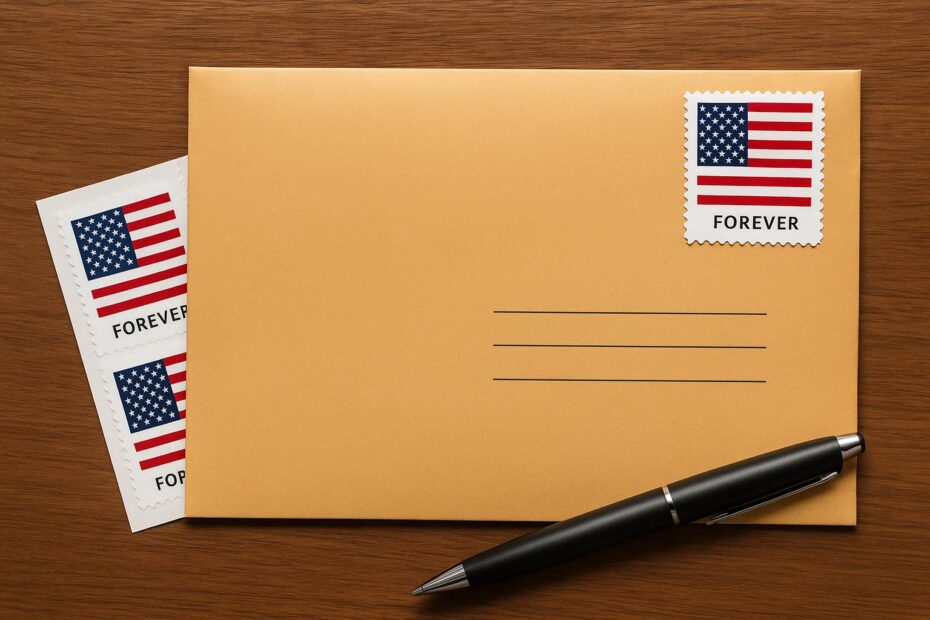
A single Forever stamp will not reliably cover a manilla envelope unless it meets the strict dimensions and weight of a standard letter. Put bluntly: most manilla envelopes are too big or too thick for one stamp. That matters when you’re sending contracts, invoices, or anything that uses a heavier stock. This piece cuts through the guesswork and shows you exactly how to figure postage, plus ways to avoid getting your envelope returned.
## Manilla Envelope Postage Guide: Calculating Forever Stamps
Start with the basics. The Postal Service sorts by shape, size, weight, and thickness. A standard first-class letter is limited to about 1 ounce, up to 6-1/8 inches high and 11-1/2 inches long, and less than 1/4 inch thick. Anything larger or thicker is a “large envelope” or a package. That distinction is what drives how many Forever stamps you need.
If your manilla envelope is 9×12 and contains a few pages, it’s almost certainly a large envelope. For domestic mail, large envelope postage is higher than a single Forever stamp. At current rates a large envelope (up to 1 ounce) typically costs more than one Forever stamp. Add weight and the cost goes up in ounce increments. So you’ll often need two or more Forever stamps for a typical manilla envelope.
## How To Tell If Your Envelope Is A Letter Or A Large Envelope
Measure. Weigh. Don’t guess.
### Measure Dimensions And Thickness
– Length and height matter first. If either dimension exceeds the letter limits, you’ve got a large envelope.
– Thickness matters next. If your sealed envelope is thicker than 1/4 inch, it’s out of the letter category.
– Bulky contents like staples, multiple pages, or small folded catalogs push you into the next tier.
You can eyeball it, but an inexpensive postal scale and a ruler save a lot of headaches. If your office sends manilla envelopes regularly, buy a digital scale for a few dozen dollars. It pays for itself quickly.
### Weigh Your Contents
Weigh the sealed envelope. The Postal Service charges by weight for large envelopes and packages. That means:
– 1 ounce or less that meets letter size: one Forever stamp (in most cases).
– If it exceeds letter limits but is within large envelope dimensions, you’ll pay the large envelope rate, which typically equals the base price for large envelope postage and increases per additional ounce.
Keep in mind: a single folded sheet can weigh less than an ounce, but once you add a printed form, return address labels, and a few staples, you can cross that threshold.
## Examples: How Many Forever Stamps For Common Manilla Envelope Scenarios
Real examples help more than rules of thumb.
### A 9×12 Envelope With A Single Sheet
Most senders use a 9×12 manilla envelope for one contract page. If the envelope is just one sheet inside, and the sealed thickness is under 1/4 inch, the postal clerk might still treat it as a large envelope because of its dimensions. That typically requires more than one Forever stamp. Expect to use two Forever stamps, or pay the large envelope postage rate at the counter.
### Two To Five Pages In A 9×12 Envelope
Two to five pages plus a return envelope almost always exceed the letter thickness. For domestic, you’ll pay the large envelope base plus additional per ounce. That usually translates to two or three Forever stamps depending on weight.
### Multiple Documents Or Small Booklet
If you’re sending a short booklet, heavier paper, or a small sample, count on multiple ounces. In that case, three or more Forever stamps are common. If you’re near 3 or 4 ounces, buy postage at the post office or print postage from an online postage provider to avoid surprises.
## Cheap Ways To Reduce Postage On Manilla Envelopes
You don’t have to accept higher postage blindly. There are practical steps to reduce the cost.
### Trim Size And Weight Where Possible
Choose the smallest envelope that fits. A 6×9 manilla envelope can still be used for multiple pages and may keep you in the letter category. Use thinner paper for letters. Remove unnecessary enclosures. Small changes add up.
### Flatten And Remove Staples
Staples and thick folds increase thickness and can push an item into a higher category. Flatten everything and use paper clips instead. If flattening isn’t possible, weigh and measure to be safe.
### Use Flats-Friendly Layouts
If you mail the same thing frequently, design it to fold flat and sit thinly in the envelope. That reduces bulk and keeps costs down.
## Practical Steps For Buying The Correct Postage
Don’t guess at the kitchen table. A few practical steps will keep mail moving.
### Weigh And Measure At Your Desk
Buy a small postal scale and a metal ruler. Measure the sealed envelope’s length, height, and thickness. Weigh it. Use the Postal Service’s published rates or an online postage calculator to get the exact charge. This is where the manilla envelope postage guide approach saves time: measure first, stamp later.
### When To Buy At The Counter
If you’re uncertain, bring one to the counter. Postal clerks can weigh and tell you exact postage. For businesses that send dozens a week, printing postage in-house through a meter or online postage supplier reduces trips and gives precise rates.
### Printing Postage Online
Online postage can be cheaper for heavier items because you avoid errors and can print exactly the required postage. Many services also let you buy and apply postage in batch. For recurring invoices or statements, this is worth the small setup.
## Common Mistakes People Make With Manilla Envelope Postage
People make the same avoidable mistakes over and over.
### Assuming All Envelopes Are Letters
That’s the most common error. Size matters more than the paper inside. A 9×12 envelope is often treated as a flat or large envelope regardless of weight.
### Underestimating Thickness
Even a few staples or a thin plastic sleeve adds thickness. If the sealed envelope measures over 1/4 inch, it’s not a letter.
### Relying Solely On Stamps Pulled From A Book
A book of Forever stamps is handy, but not always enough. If you affix one stamp because you’re used to letters, the mail will either be charged due postage or returned.
## When Extra Services Affect Postage
Special services change the math. Tracking, insurance, and certified mail add fees on top of postage.
#### Registered, Certified, And Insurance Fees
If you need proof or insurance, add the service fees. These fees do not replace postage. So a manilla envelope requiring tracking still needs the correct postage for its size and weight.
#### Delivery Speed And Signature Requirements
Faster services cost more. Signature confirmation adds a small fee. For high-value documents, pay the extra to avoid headaches later.
## Dealer And Bulk Mailing Considerations
If you’re a small business that ships many envelopes, you can reduce per-item cost.
### Bulk Postage Options
Permit imprints and presorted mail reduce postage. You need volume and some setup, but for regular batches of invoices or marketing pieces, the savings are real.
### Using The Right Envelope For Scale
Design your mail to fit a standard letter size if possible. That keeps you in the cheapest postage category and reduces reliance on multiple Forever stamps.
## Quick Reference: Common Charges For Domestic Mail
A short, practical check list. These are examples, not exact rates.
– Standard Letter (≤1 oz, within dimensions): typically one Forever stamp.
– Oversized Letter By Dimension Or Thickness: treated as a large envelope; pay large envelope postage.
– Large Envelope Additional Ounces: add postage per additional ounce.
– Extra Services: add fees on top of postage.
This manilla envelope postage guide exists because rules are precise and small differences matter. Weigh early. Measure carefully. If you mail irregularly, a quick trip to the post office saves time later when a client complains that an important package was returned or delayed for insufficient postage. And if you’re ever unsure, print postage after you weigh — it’s less expensive than a returned envelope and less embarassing than a mispelled address on a rushed cover letter.